
Can planet positive action be profitable? The exploration of this question led to the creation of Handprint Technology, a Singapore-based startup, launched by a couple of academics with interest in regenerative economy. Handprint is the opposite of ‘footprint’; whereas footprint implies a negative byproduct of business activity, handprint is intentional positive impact on the environment through nature positive action.
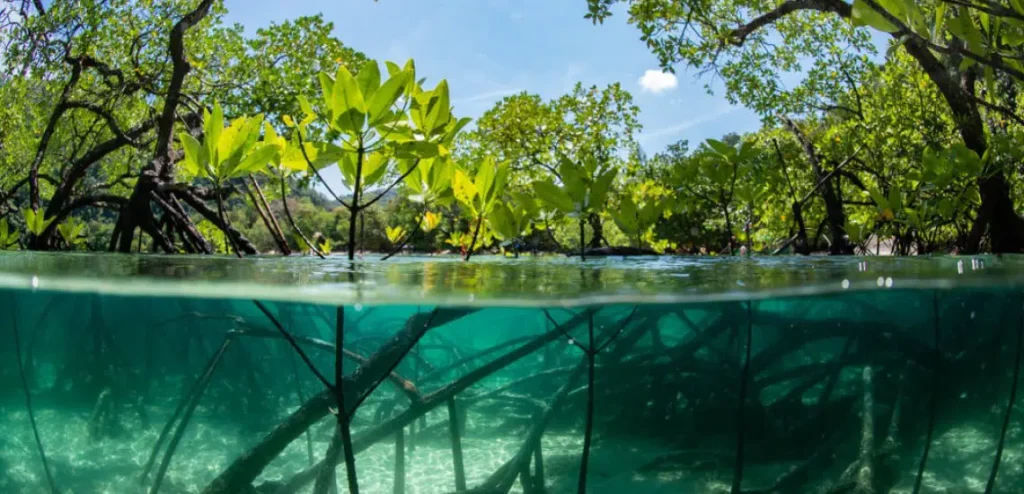
Handprint Technology has built an impact platform that allows companies to invest directly in nature based projects like reforestation of degraded landscapes and restoration of mangroves and coral reefs, and removal of ocean plastic. Unlike many other platforms that are ‘donation’ based, Handprint sells ‘units of impact’, say planting of a certain number of trees. Also, unlike most other platforms, the user of Handprint is not the CSR department, but marketing or employee engagement. This is where the business value comes in.
Companies can communicate the positive climate value they are creating with their customers and employees, thus burnishing their sustainability credentials. Better still, they can engage them in climate action, either investing on their behalf, say when they buy a company’s product or click on its ad, or by giving them impact vouchers, enabling them to choose the initiative they want to support. In each case, they share evidence, such as data, pictures, impact reports and videos from the ground. To enable companies to create their own impact program, Handprint provides its platform through Application Programming Interface (API), which can be integrated by them in their own digital platforms, like websites and apps. This create differentiation, build credentials and improve stakeholder connect, which result in better business outcomes claims Handprint. For instance, sales of one eCommerce client jumped 16% whereas the ad recall of another shot up.
Though the platform also enables the purchase of renewable energy certificates (RECs) and carbon credits, it is not the core of Handprint’s proposition. The impact they sell, measured by the square meters of nature restored or the number of lives impacted, cannot be used for regulatory purposes, but is more impactful because it does not incur the costly certification needed by the regulators. There is a greater environmental bang for the investment buck.
To prevent greenwashing and fraud, Handprint vets each project on its ‘marketplace’, using methodology developed with a Swiss bank and validated by DBS. The right to audit is built into the contract with their imapact partners. Even then the initial investment in a project is small, which is scaled up only on completion of a successful project and credible reporting. It currently has projects in 34 countries including Indonesia, Myanmar, Kenya and Madagascar, among others. Handprint’s client-base including well-known corporations, like DBS, FedEx and Traveloka is proof that it works in the corporate environment.